"All Is Well" — Faith Before the Miracle

When Faith Speaks Before the Miracle Appears
Have you ever been in a situation where everything in front of you suggested that things were falling apart, yet deep within your spirit you sensed that God was still in control?
There are moments in life when our circumstances speak one message, but faith invites us to speak another. The tension between those two voices is where faith is truly formed.
Faith is not merely believing God after the miracle happens. Faith is choosing to trust Him before the evidence appears.
The story we are exploring today illustrates that kind of faith beautifully. It is the story of a woman whose promise from God appeared to die in her arms, yet she responded with a declaration that still echoes through Scripture:
“It is well.”
Her story is found in 2 Kings chapter 4, and it shows us what it looks like to hold onto God when circumstances challenge the promise.
The Faith That Recognizes God’s Presence
Scripture
2 Kings 4:8–10
“Now it happened one day that Elisha went to Shunem, where there was a notable woman; and she persuaded him to eat some food… She said to her husband, ‘Look now, I know that this is a holy man of God.’”
The Bible describes her as a notable woman, meaning a woman of influence, strength, and discernment.
She recognized something about the prophet Elisha that others may have overlooked. She discerned the presence of God on his life.
Because of that recognition, she chose to serve him by creating a space in her home where he could rest.
This teaches us something important about faith:
Faith often begins with recognition.
She recognized the presence of God and responded with hospitality and honor.
Often, blessings begin with simple acts of obedience and generosity that seem ordinary at the time.
She wasn’t serving in order to receive something. She was simply responding to what she discerned God was doing.
The Promise That Came Unexpectedly
Scripture
2 Kings 4:16–17
“About this time next year you shall embrace a son.”
The prophet tells her that God will bless her with a son.
This was significant because the text implies that she and her husband had lived many years without children.
At first she responds cautiously.
She says, “No, my lord. Do not lie to your maidservant.”
Her response reveals something deeply human.
Sometimes when we have waited a long time for something, hope becomes fragile.
We begin to protect ourselves from disappointment.
Yet God’s promises do not depend on our emotional certainty.
The following verse simply states:
“The woman conceived and bore a son.”
God fulfilled the promise.
When the Promise Appears to Die
Years later, the story takes a dramatic turn.
Scripture
2 Kings 4:19–20
“And he said to his father, ‘My head, my head!’… Then he sat on her knees till noon, and then died.”
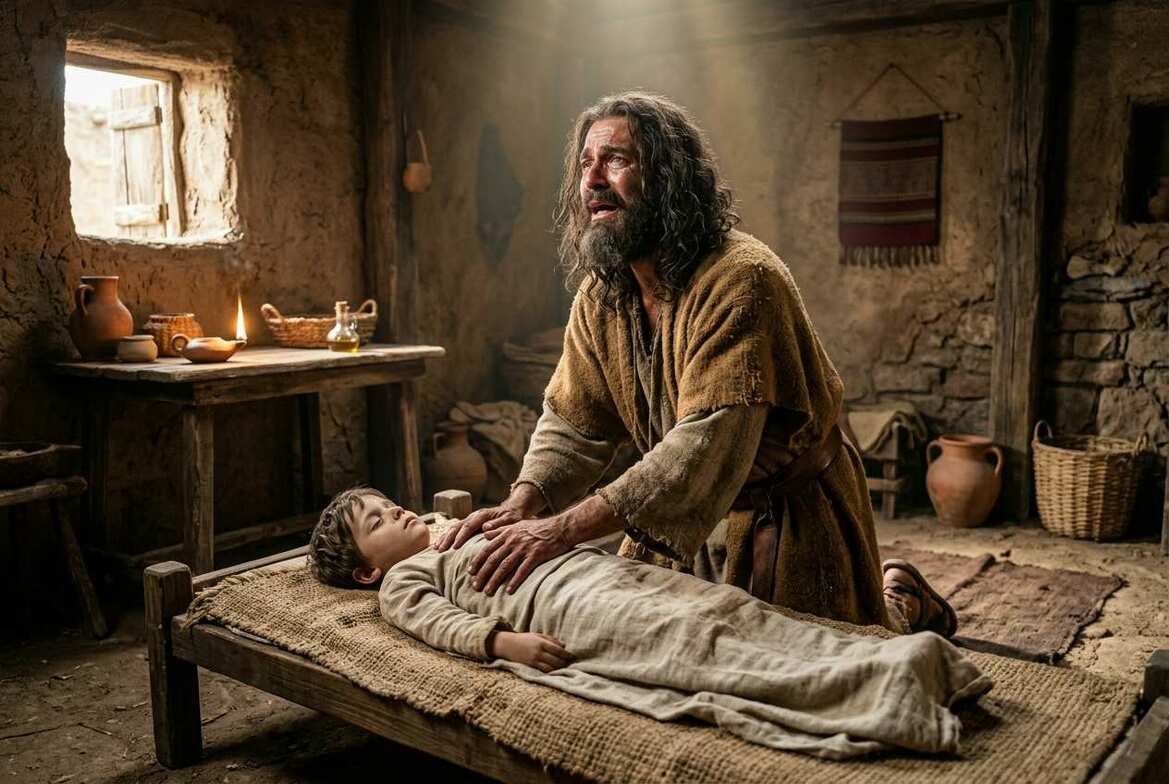
The boy suddenly becomes ill and dies in his mother’s arms.
This moment is devastating.
The very promise God gave her now appears to be taken away.
Many believers face seasons like this. We receive a promise, a calling, or a breakthrough—and then circumstances arise that seem to contradict what God spoke.
Dreams stall.
Opportunities close.
Hope feels threatened.
In those moments we wrestle with a difficult question:
Was the promise real?
Her Remarkable Response
What she does next reveals extraordinary faith.
She takes the child and lays him on the bed in the prophet’s room. She closes the door and goes to find Elisha.
When her husband asks where she is going, she answers simply:
Scripture
2 Kings 4:23
“It is well.”
Later, when the prophet’s servant asks if everything is okay with her family, she says again:
Scripture
2 Kings 4:26
“It is well.”
This declaration is remarkable because her circumstances were anything but well.
Her words were not denial.
She was not pretending nothing happened.
Instead, she was making a faith declaration before the manifestation of the miracle.
She was saying in essence:
“My situation is painful, but my confidence in God remains intact.”
Redirecting Anxiety Into Faith
Moments like this naturally produce anxiety.
The Greek word used in the New Testament for anxiety literally means “a distracting care.”
Anxiety pulls our focus away from God and onto the chaos around us.
The Apostle Paul speaks directly to this experience.
Scripture
Philippians 4:6
“Be anxious for nothing, but in everything by prayer and supplication, with thanksgiving, let your requests be made known to God.”
Paul does not deny that we have concerns.
Instead, he gives us a redirection.
Every anxious thought can become a prayer.
Every worry can become a conversation with God.
Rather than spiraling in fear, we can bring those emotions to God and allow Him to redirect our focus.
The Shunammite woman demonstrated this principle. Instead of sitting in despair, she moved toward the place where she believed God’s power would intervene.
Peace Before the Answer
Paul continues with an extraordinary promise.
Scripture
Philippians 4:7
“And the peace of God, which surpasses all understanding, will guard your hearts and minds through Christ Jesus.”
Notice that this peace does not come after the problem is solved.
It comes while we are still waiting.
The peace of God acts like a guard standing watch over our hearts and minds.
It protects us from despair, fear, and discouragement.
The Shunammite woman carried this kind of peace.
Her declaration of “It is well” was a reflection of trust in God’s character.
She did not yet see the miracle, but she trusted the God who gave the promise.
Paul writes to believers who were grieving the loss of loved ones. He reminds them that while grief is natural, Christians grieve differently because we carry hope. The reason for that hope is simple and powerful: Jesus died and rose again, and because of His resurrection, those who have died in Him will also rise.
Paul explains that when Christ returns, the dead in Christ will rise first, and those who are still alive will be caught up together with them to meet the Lord. The promise is not just resurrection, but reunion—believers will be gathered together and will live with the Lord forever.
The passage closes with a simple instruction:
“Therefore encourage one another with these words.” (1 Thessalonians 4:18)
In other words, this truth was given by God to bring comfort, strengthen faith, and anchor hope during times of loss.
In the story of the Shunammite woman in 2 Kings 4, the promise of God appeared to die in her arms when her son passed away. Yet in the middle of unimaginable grief, she made a declaration of faith:
“It is well.” (2 Kings 4:26)
Her words reveal something profound about faith. She spoke peace before the miracle appeared. She chose to trust God even when her circumstances suggested the opposite.
The passage in 1 Thessalonians 4 echoes this same kind of faith. When believers lose loved ones, the pain is real, but the promise of God gives us a deeper perspective. Just as the Shunammite woman trusted that God could restore what seemed lost, believers today trust that death is not the end of the story.
Through Christ’s resurrection, God promises that those who have died in Him will be raised again and reunited with Him and with His people.
This means that even in the midst of grief, we can carry a quiet confidence that says:
“All is not lost. God’s promise still stands.”
Faith allows us to hold sorrow and hope at the same time. We mourn because love is real, but we also stand on the promise that God is faithful and life will ultimately triumph over death.
That is why Paul tells us to encourage one another with these words. The hope of resurrection and reunion reminds us that God’s story for His people does not end with loss—it ends with restoration, life, and eternal fellowship with Him.
Gratitude in the Waiting
Faith also involves gratitude before the answer appears.
Scripture
Nehemiah 8:10
“The joy of the Lord is your strength.”
Joy and gratitude create strength within the believer.
When we thank God even before we see the outcome, we are declaring our trust in His goodness.
Gratitude shifts our attention away from the problem and toward the One who is able to solve it.
Instead of asking whether God will come through, we begin anticipating how He will reveal His faithfulness.
The Miracle
Eventually the prophet arrives.
He goes into the room where the child lies and begins to pray.
Scripture
2 Kings 4:35
“The child sneezed seven times, and the child opened his eyes.”
Life returned.
The promise that appeared lost was restored.
The prophet then calls the mother and says:
Scripture
2 Kings 4:36
“Pick up your son.”
The miracle manifests.
What This Teaches Us
This story reminds us of several profound truths.
First, God’s promises are not easily canceled by circumstances.
Second, faith often speaks before evidence appears.
Third, peace can exist even while we are waiting for answers.
The Shunammite woman did not know how God would intervene, but she trusted that He would.
Her declaration, “It is well,” became an expression of confidence in God’s character rather than her situation.
Reflection
Consider this question today:
What situation in your life currently feels uncertain or overwhelming?
Is there an area where God may be inviting you to trust Him more deeply?
Faith does not always remove the difficulty immediately, but it anchors us in God’s faithfulness while we wait.
Closing Prayer
Lord, we thank You that Your promises are trustworthy.
Help us to trust You even when circumstances appear uncertain.
Teach us to redirect our worries into prayer and to rest in the peace that comes from knowing You are in control.
Strengthen our faith so that we can declare Your goodness even before the miracle appears.
Guard our hearts and minds with Your peace and help us walk forward with confidence in Your faithfulness.
Amen.

-
VISIT US