Freedom from Sin to Resurrection Life: Breaking the Chains of False Worship

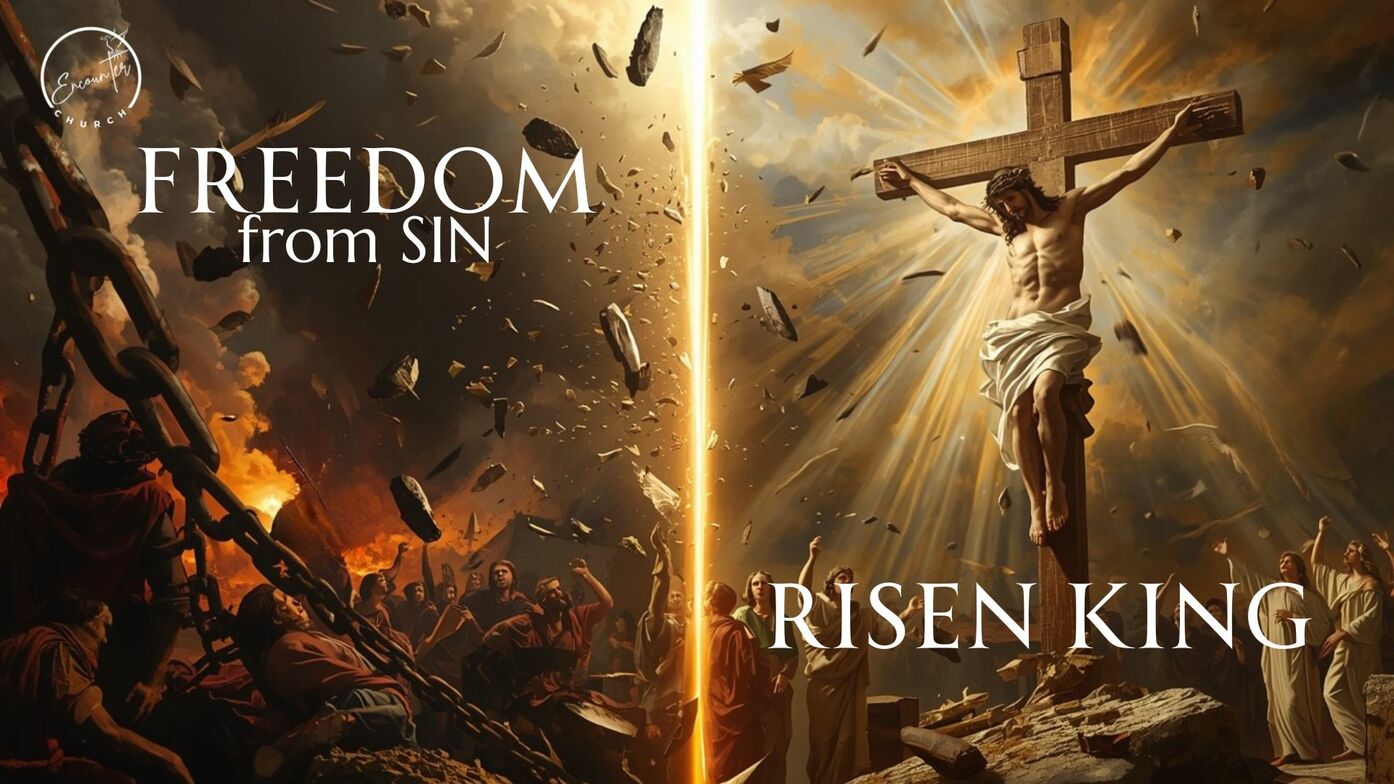
On this Resurrection Sunday, we celebrate not just Christ's victory over death, but our freedom from the enslaving power of sin. This freedom isn't just about forgiveness—it's about breaking the chains that bind us to false gods and returning to our true purpose as image bearers of the living God.
What Does It Mean to Be an Image Bearer?
From the very beginning, God designed us with a specific purpose. "'Then God said, Let us make man in our image, after our likeness: and let them have dominion over the fish of the sea, and over the fowl of the air, and over the cattle, and over all the earth, and over every creeping thing that creepeth upon the earth. So God created man in his own image, in the image of God created he him; male and female created he them.'" - Genesis 1:26-27 King James Version (KJV)
Think of a mirror for a moment. When you look into it, you don't see yourself—you see an image of yourself. That reflection does nothing independently of what it's reflecting. It would be strange if your reflection suddenly walked away and did its own thing!
This is exactly how Jesus lived. He said He only did what He saw His Father do and only spoke what He heard His Father say. Why? Because He was teaching us how to be image bearers.
We Were Made to Reflect God's Glory
As image bearers, we weren't designed to live for ourselves. We were created to reflect God's glory, beauty, and worthiness back to Him and into the world. This reflection happens through our praise, worship, and lifestyle—how we treat people, work, speak, and love.
God didn't design us to be slaves of sin. He designed us to be image bearers who reflect His glory throughout the earth.
How Sin Breaks Our Purpose
When Romans 3:23 says that all have sinned and fallen short of the glory of God, it's revealing something profound. To fall short of God's glory means falling short of the very purpose we were created for—reflecting His image.
Sin Is About Broken Relationship, Not Just Broken Rules
We need to shift our thinking about sin. Sin isn't primarily about breaking rules—it's about breaking relationship with the God whose image we were made to bear. Sin separates us from His likeness and presence, distorting the image we were created to reflect.
Notice that Paul primarily uses the word "sin" in the singular, not "sins" in the plural. This distinction matters enormously because sin (singular) is a power—a reigning, controlling, enslaving force. Sins (plural) are the behaviors we act out when we're under sin's dominion.
Sin as Misdirected Worship
At its core, every sin is misdirected worship—choosing another god. That god might be self, pleasure, control, security, or human approval. We don't just have sins; we have gods. Whatever we worship, that's the image we bear and reflect.
This is what the Ten Commandments diagnose. Behind every act of anger, lust, greed, or deception, there's a rival god—something we fear, love, or trust more than God.
The Devastating Power of Idolatry
In Eden, the serpent's opening move was "Did God really say?" But the real message underneath was "You can trust me; you can't trust Him." This is always where sin begins—the moment we believe something or someone else will be a better god than God.
Romans 1 tells us about God's response: He "gave them over." This is terrifying—God giving us over to what we trust more than Him. "'For even though they knew God, they did not honour him as God or give thanks to him, but their thinking became futile and their foolish hearts were darkened... Therefore God gave them over in the sinful desires of their hearts.'" - Romans 1:21, 24 King James Version (KJV)
When Idols Become Our Masters
Here's the devastating truth about idolatry: the idols we choose don't just disappoint us—they devour us. We think we're choosing the idol, but eventually the idol chooses us. We think we're in control, but eventually we're enslaved.
This is what addiction looks like on a spiritual level. Those patterns you keep returning to represent the dominion of sin's deceptions and idolatry at work. Apart from Christ, we don't just commit sins—we live under sin's dominion.
But Then Came Jesus
"'For the wages of sin is death; but the gift of God is eternal life through Jesus Christ our Lord.'" - Romans 6:23 King James Version (KJV)
On the cross, Jesus stepped into our exile, our death, our separation. He bore the full wage of sin's regime—physical death, spiritual forsakenness, the weight of the curse—so we could be brought back to God.
The Cross Breaks Sin's Power
The cross isn't only where your sins were forgiven. It's the place where sin's power was broken. Jesus died to sin once for all, and the dominion of sin is shattered for everyone united to Him.
"'There is therefore now no condemnation to them which are in Christ Jesus, who walk not after the flesh, but after the Spirit. For the law of the Spirit of life in Christ Jesus hath made me free from the law of sin and death.'" - Romans 8:1-2 King James Version (KJV)
How to Break Free from Sin's Dominion
If you want to break sin's dominion over your life, stop worshiping at sin's altar. Stop going back to those places, people, or patterns that feed your false gods.
The Way Out Is Redirected Worship
The way out isn't willpower alone—it's redirected worship. Every time you feel the pull of addiction or sinful patterns, redirect that worship to Jesus. Tell Him you love Him, thank Him, worship Him, and give Him glory because He is your Lord and Savior.
The resurrection is God's declaration that a stronger Lord has invaded the realm of sin and death—and He won. Christ has already fought the battle you're trying to fight, and He has the victory.
The Power of Confession and Self-Awareness
"'If we confess our sins, he is faithful and just to forgive us our sins, and to cleanse us from all unrighteousness.'" - 1 John 1:9 King James Version (KJV)
Confession is the doorway where truth displaces self-deception and grace displaces guilt. It's really about self-awareness—becoming aware of who you really are before God.
True Confession Goes Beyond Admitting Mistakes
Confession isn't merely admitting bad behavior or saying "my bad." True confession means renouncing false gods to return to the true God. It's saying, "That idol is not my master anymore. You are, Lord."
Good News for Every Situation
For Those Struggling with Addiction
In Christ, sin is no longer your master. If you accept Jesus as Lord and Savior, the bondage of addiction can be broken. You don't have to obey that old god anymore. The risen Christ has broken its power over you.
For the Religious and Morally Upright
You can avoid every scandalous sin and still be serving the wrong god—self-image, reputation, control. The resurrection doesn't call you to simply be better; it calls you to change gods.
For Those Living Under Shame
The cross says your past sins were real, but they're not final. The resurrection declares that the power that held you is broken, and new life in the Spirit is available right now.
Life Application
This week, examine your life for false gods—anything you fear, love, or trust more than God. When you identify these idols, don't try to overcome them through willpower alone. Instead, redirect your worship to Jesus. Each time you feel drawn to that false god, immediately turn to worship the true and living God.
Remember: "'Now the Lord is that Spirit: and where the Spirit of the Lord is, there is liberty.'" - 2 Corinthians 3:17 King James Version (KJV)
Ask yourself these questions:
- What false gods am I serving in my life right now?
- Where do I go for comfort, security, or identity instead of going to God?
- How can I redirect my worship from these idols back to Jesus this week?
- What practical steps can I take to stop "worshiping at the wrong altars"?
The battle isn't yours—it's the Lord's. And He has already won the victory. Walk in the freedom that Christ purchased for you on the cross and demonstrated through His resurrection.

-
VISIT US