When the Blind See and the Seeing Remain Blind

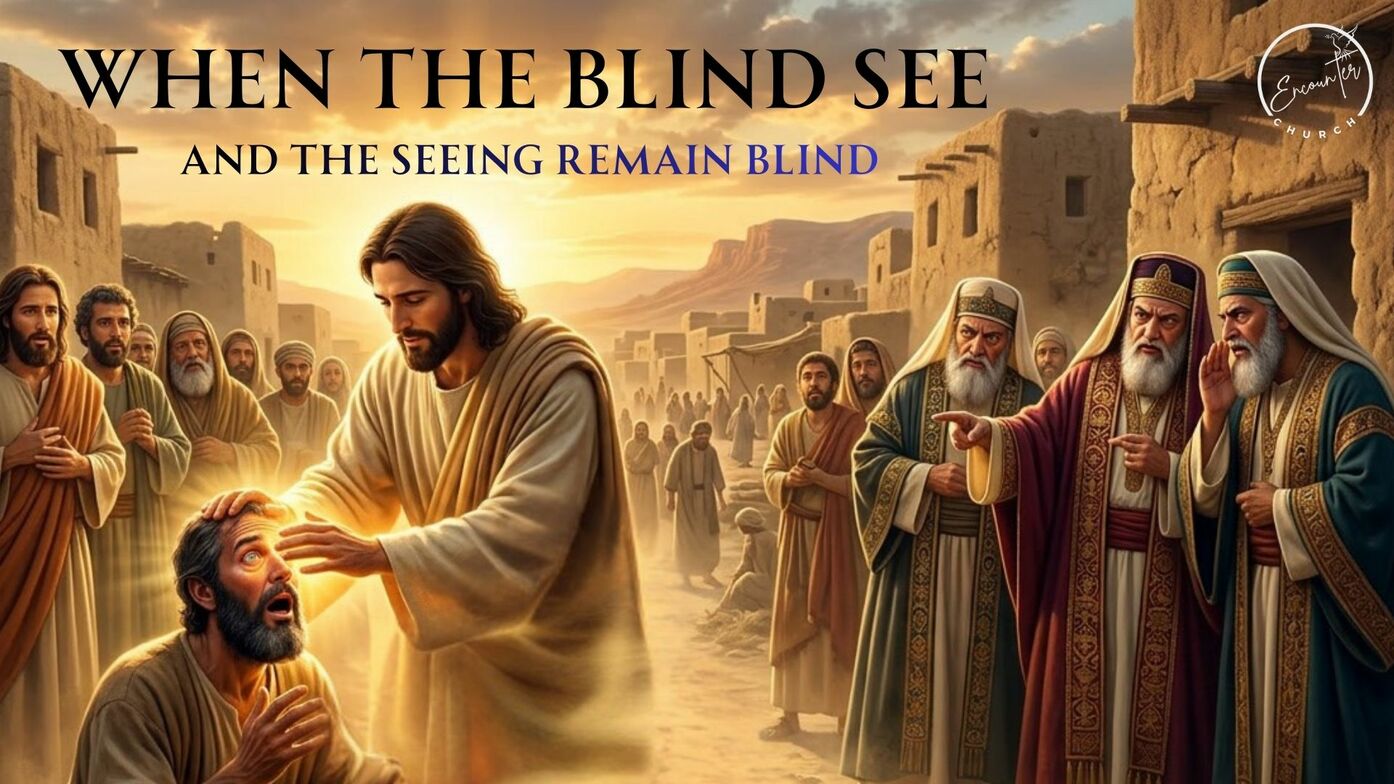
When the Blind See and the Seeing Remain Blind
In John chapter 9, we encounter one of the most powerful stories in all of Scripture - a man born blind who receives his sight through Jesus. But this miracle reveals something far deeper than physical healing. It exposes the spiritual condition of humanity and challenges us to examine our own ability to truly see what God is doing.
Why Do Bad Things Happen to Good People?
The story begins with a question that haunts humanity: "Rabbi, who sinned, this man or his parents, that he would be born blind?" The disciples, like many of us today, assume that suffering must have a moral explanation. Someone must be to blame.
But Jesus shifts the focus entirely. He declares that neither the man nor his parents sinned to cause this blindness. Instead, "it was so that the works of God might be displayed in him."
This transforms everything. Instead of looking for someone to blame, Jesus points us toward purpose. What if your struggles aren't punishment but preparation? What if your difficulties are actually platforms for God's glory to be revealed?
Jesus Creates What Never Existed
Notice something crucial: this man was born blind. Jesus isn't restoring his sight - He's giving him something he never had before. This echoes the very act of creation itself, when God formed man from the dust of the earth.
Jesus spits on the ground, makes mud, and applies it to the man's eyes. Then He gives a simple command: "Go wash in the pool of Siloam." This might seem strange, even gross, but when you're desperate for breakthrough, you don't question the method - you obey.
Miracles Often Require Obedience Before Manifestation
Here's a powerful truth: the man had to walk to the pool while still blind. He had to obey before he could see the result. Faith often requires movement before the miracle appears.
God frequently asks us to step out in obedience even when we can't see how things will work out. The man went to the water blind but returned seeing. Sometimes you have to trust God's process even when it doesn't make sense to your natural mind.
When Religion Opposes God's Work
The religious leaders' response to this miracle reveals the danger of spiritual blindness. Instead of celebrating that a man born blind could now see, they focused on the fact that Jesus performed this miracle on the Sabbath.
"This man is not from God because he does not keep the Sabbath," they declared. They called the miracle worker a sinner and attacked both Jesus and the man who received the miracle.
Religion Without Revelation Rejects What It Can't Control
The Pharisees couldn't fit this miracle into their religious paradigm, so they rejected it entirely. When they couldn't defeat the man's testimony, they attacked his character: "You were born entirely in sin, and yet you are teaching us?"
This reveals a sobering truth: religion without revelation will always reject what it cannot control. When our traditions become more important than God's power, we become spiritually blind.
The Progressive Revelation of Truth
Watch how the healed man's understanding grows throughout the chapter:
- First, he calls Jesus "the man who is called Jesus" (verse 11)
- Then he declares Jesus is "a prophet" (verse 17)
- Finally, he concludes "if this man were not from God, he could do nothing" (verse 33)
Meanwhile, the religious leaders grow harder and more resistant to truth. The man who received the miracle grows in revelation while those who think they already see remain blind.
The Danger of Spiritual Pride
Jesus concludes with these piercing words: "If you were blind, you would have no sin. But now that you maintain 'we see,' your sin remains."
The greatest spiritual danger isn't ignorance - it's the pride that says "I already see clearly." When we think we have God figured out, when we believe our traditions are more important than His power, we become like the Pharisees - blind to what God is actually doing.
God Still Creates Miracles Today
Just as Jesus created sight where none existed before, He still performs creative miracles today. He can give you something you've never had. He can heal what was broken from birth. He can provide in ways that defy natural explanation.
But here's the key: we must remain humble and open to how God chooses to work. We cannot let our religious expectations blind us to His supernatural interventions.
Life Application
This week, examine your own spiritual sight. Are there areas where religious tradition or personal pride might be blinding you to what God wants to do? Like the man born blind, you may need to step out in obedience before you see the miracle.
Ask yourself these questions:
- Am I more concerned with how God works or that He works?
- Do I reject what I cannot understand or control?
- Am I willing to obey God even when I can't see the outcome?
- Where might spiritual pride be keeping me from seeing God's power?
The same Jesus who opened the eyes of the humble will expose the blindness of those who trust their own vision. Choose humility. Choose to see. Choose to let God be God, even when His methods don't fit your expectations.

-
VISIT US